More than 75% of global consumers prefer to buy products in their native language. This underscores the role that multilingual websites play in reaching a broader audience.
Taking your website global requires the right tools to manage and optimize multilingual content effectively—not just translation. Let's explore the 7 best tools for multilingual websites that help you engage with customers worldwide.
The Best Translation Management Tools
Managing multilingual content efficiently is crucial for reaching a global audience. These translation management tools can streamline the process. For developers looking into the best translation APIs, there are various options available, such as the Abstract Translation API which covers over 80 languages.
1. Weglot
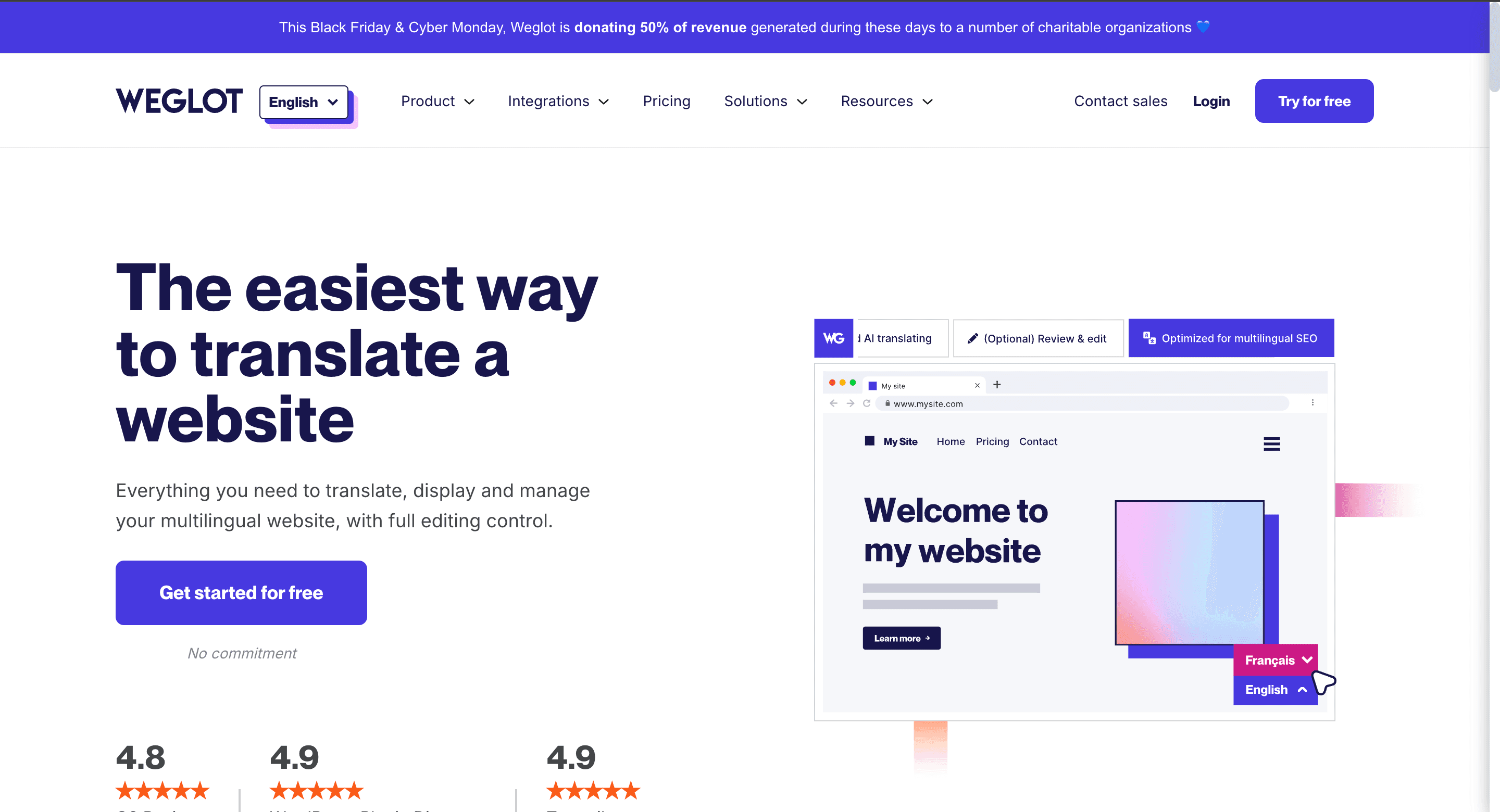
Weglot simplifies website translation with:
- Automatic Translation: Translate website content into over 100 languages instantly.
- Easy Integration: Compatible with CMS platforms like WordPress, Shopify, and Squarespace.
- Visual Editor: Edit translations directly through a visual interface.
- SEO Optimization: Optimizes translated pages for search engines.
- Customizable Language Switcher: Allows easy language switching.
- Right-to-Left Language Support: Properly displays languages such as Arabic and Hebrew.
2. Transifex
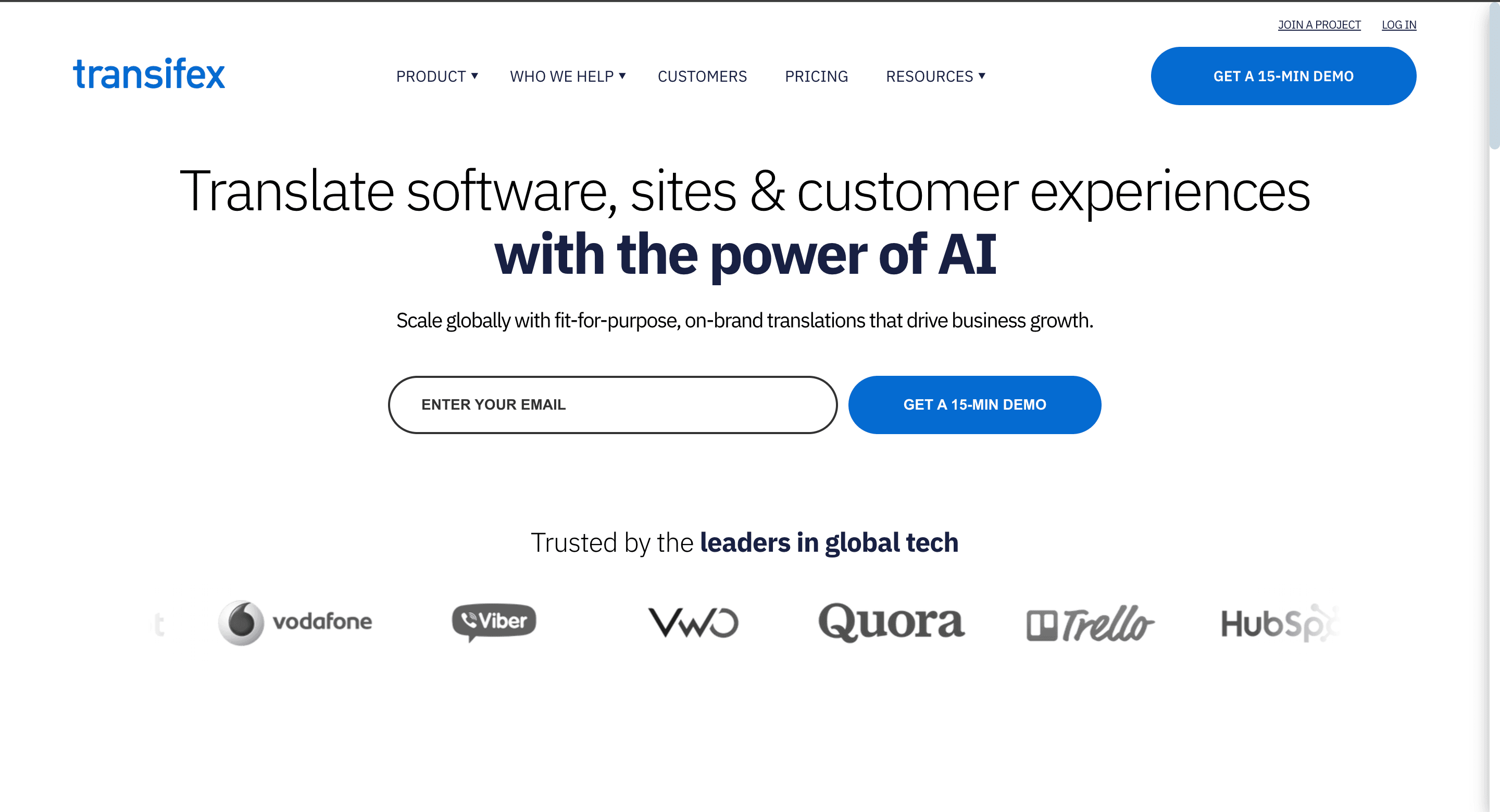
Transifex is a cloud-based localization platform for managing multilingual content:
- AI-Powered Translations: Offers machine translation with translation memory.
- Collaboration Tools: Facilitates teamwork between translators and developers.
- Integrations: Supports various file formats and integrates with workflows.
- API Access: Automates localization processes.
- Quality Assurance: Ensures translation accuracy and quality.
3. Lokalise
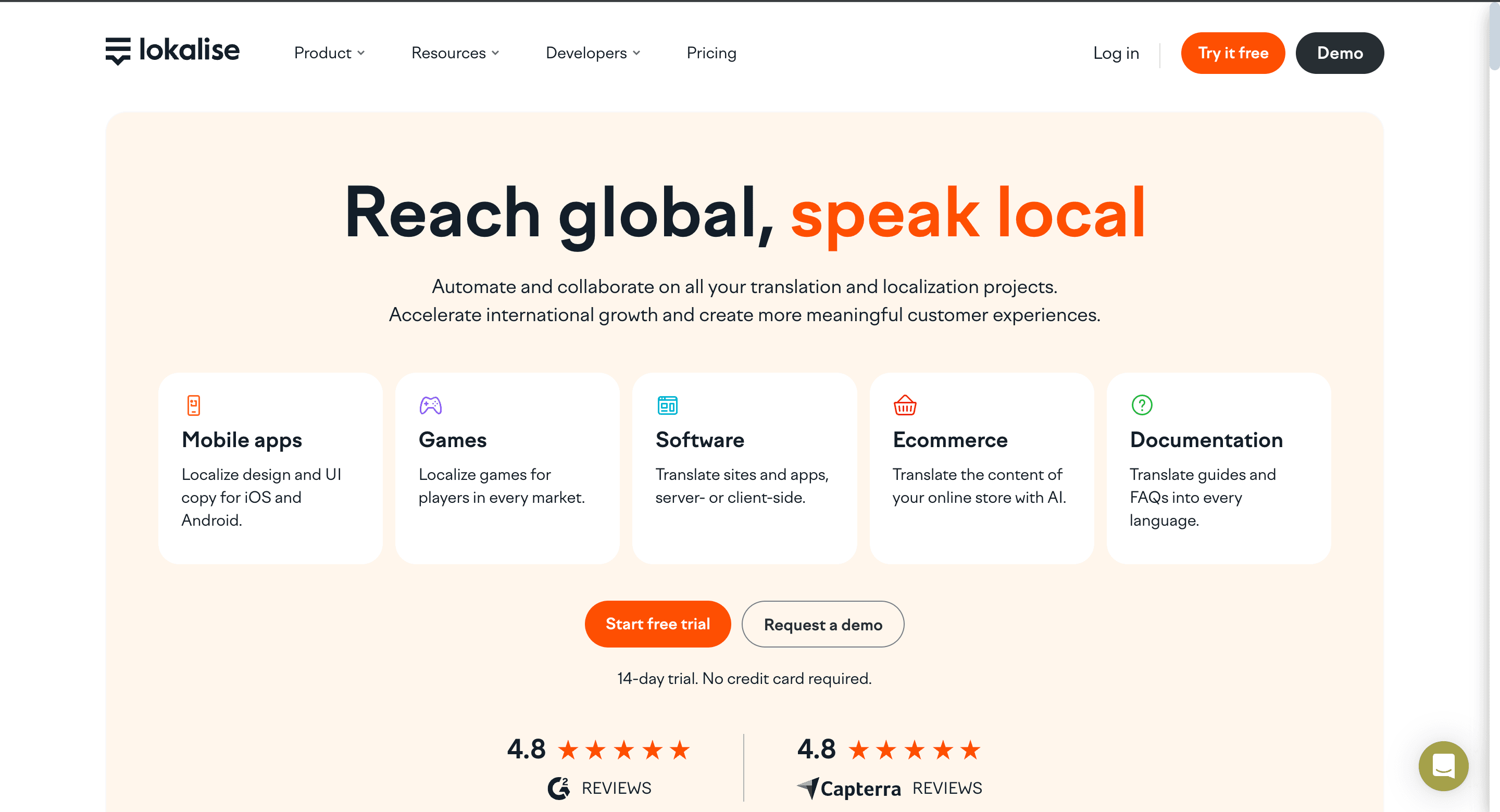
Lokalise streamlines localization for websites and software:
- Collaboration Features: Enables interaction between translators and developers.
- Automation: Offers machine translation and translation memory.
- Platform Integrations: Compatible with various platforms and file formats.
- API and Webhooks: Allows automation and integration into workflows.
- Quality Control: Provides terminology management and quality assurance tools.
4. Smartling
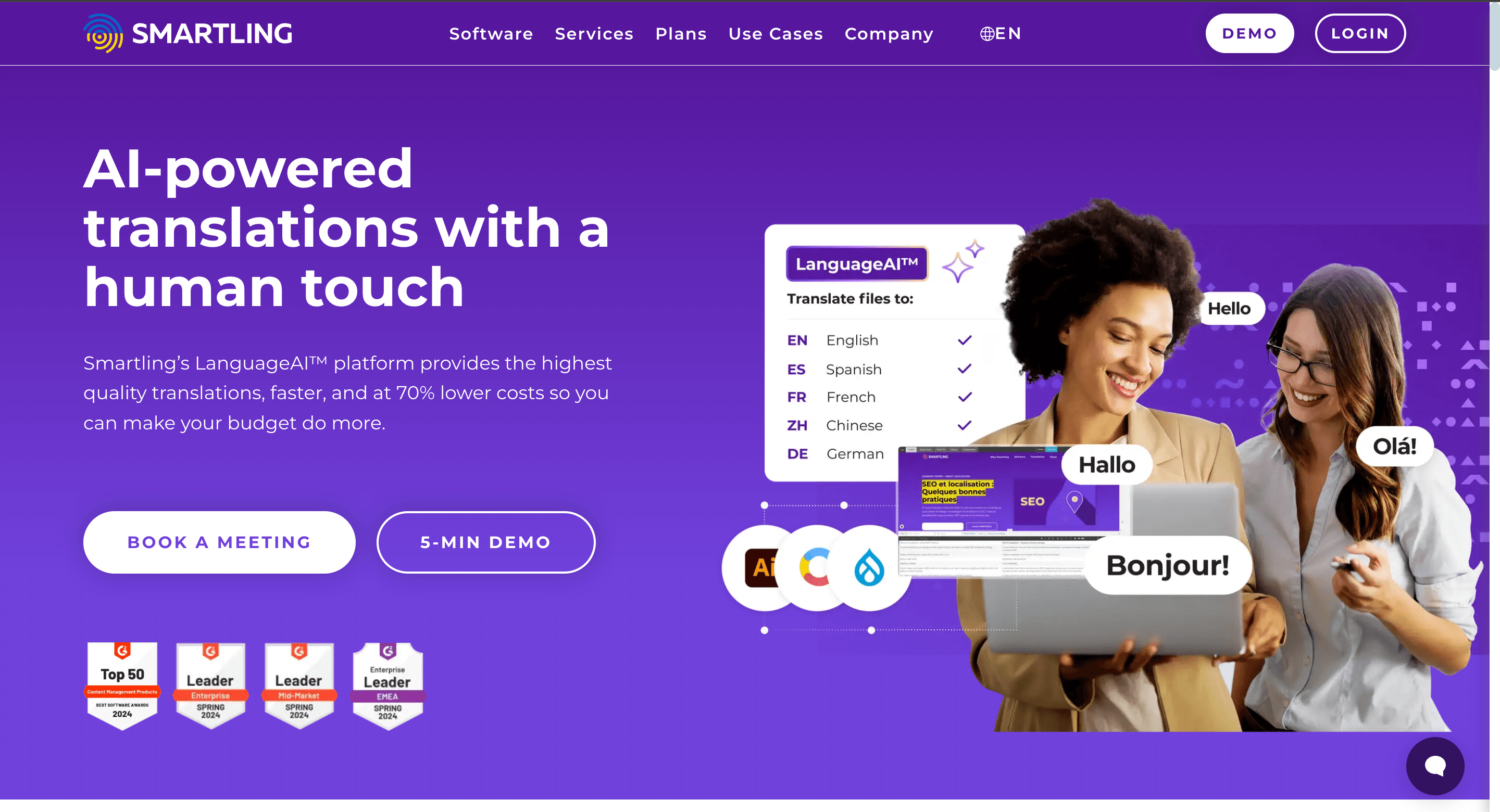
Smartling focuses on automating the translation process for enterprises:
- AI Translation: Uses AI to improve translation efficiency.
- Content Integration: Integrates with CMS for efficient workflows.
- Visual Context: Provides visual context for better accuracy.
- Workflow Automation: Reduces manual tasks.
- Analytics and Reporting: Offers insights into translation performance.
5. Phrase
Phrase optimizes localization with cloud-based technology:
- Machine Translation Engines: Integrates various machine translation providers.
- Translation Memory: Maintains consistency across translations.
- Terminology Management: Ensures consistent term use.
- Content Integrations: Connects with different content systems.
- Quality Assurance: Checks for errors and adherence to guidelines.
These tools assist in effectively managing multilingual websites. By selecting the right one, you can enhance your site's global reach and provide a better user experience.
6 General Multilingual Best Practices
To reach a global audience effectively, optimize your multilingual website for search engines using these tools and practices. For more in-depth guidance, check out our multilingual SEO best practices.
1. Apply hreflang Tags
Use hreflang tags to guide search engines on language and regional targeting. Hreflang tags improve indexing and ensure the correct content reaches the right audience.
2. Optimize URL Structures
Implement clear URL structures for each language version, such as example.com/en/ for English. Consistent page names across languages help users navigate easily.
3. Localize Content
Adapt content to reflect cultural nuances and local customs, including images, currencies, and date formats, enhancing relatability. For effective content localization strategies, ensure your localization efforts resonate with your target audience.
4. Use One Language Per Page
For clarity and SEO performance, use one language per page. This improves readability and indexing.
5. Translate Metadata
Translate metadata like title tags and meta descriptions to improve visibility in search results for different languages.
6. Provide Easy Language Switchers
Integrate user-friendly language switchers for easy navigation, allowing visitors to switch languages easily.
Best Practices and Tips for Multilingual E-commerce
Expanding your e-commerce store globally involves integrating multilingual features for a smooth shopping experience.
1. Enable Shopify's Multilingual Features
Use Shopify apps like Langify or Weglot to:
- Manage multiple language versions
- Automatically translate content with manual edit options
- Provide language switchers for easy navigation
- Optimize for multilingual SEO
2. Integrate Language Solutions
Integrate translation management systems like Smartling or Lokalise to:
- Collaborate with translators and manage workflows
- Maintain consistency across languages
- Update translations automatically when content changes
For more efficient content workflows, you can streamline content management with Strapi and manage multilingual content with Strapi using its internationalization feature.
3. Translate Product Information and Descriptions
Ensure all product details are accurately translated to improve user experience and build trust with international customers. Use professional translators when possible.
4. Localize Your Website and Online Store
Go beyond translation by adapting your website to meet cultural preferences, such as using local currencies and adjusting imagery to resonate with local audiences.
How to Choose the Right Tools for Your Multilingual Website
Selecting the right tools for your multilingual website is crucial for global reach. Understanding the multilingual CMS benefits can help you make an informed decision. Consider these factors:
Evaluate Translation Systems
Assess translation systems that fit your technical expertise and website complexity. Tools like Weglot, Lokalise, and Smartling offer various translation options. Consider features like translation memory and collaboration tools. For a flexible solution, consider Strapi i18n features, which streamline content updates across languages. An open-source CMS for multilingual sites like Strapi provides the flexibility and scalability needed to manage content in various languages efficiently.
Compare SEO Tools
Compare SEO tools for international markets, like Ahrefs and SEMrush, for multilingual keyword research and site audit features. Tools like Yoast SEO for WordPress support hreflang tags and optimize multilingual content.
Consider Scalability and Updates
Choose tools that can scale with your website and simplify content updates across languages. CMS platforms like Drupal and Joomla offer built-in multilingual support. Translation systems like Transifex and Crowdin make managing translations more efficient.
Understand Your Audience's Needs
Select tools that align with your audience's preferences and language requirements. Ensure support for right-to-left languages if needed and accessible language switchers for improved user experience.
Choose the Right Tools for Global Success
By understanding your audience's needs and choosing tools like the Strapi Internationalization (i18n) Plugin, which allows for creating and managing translated content in multiple languages, you lay the foundation for international success. With platforms like Strapi, which offers robust internationalization features, you can create and manage content in multiple languages and locales, making it ideal for multilingual websites or apps. Strapi v5 comes with flexible pricing plans tailored to various needs, including individual developers, small teams, and larger enterprises. Let us help you achieve high performance and flexibility with our headless CMS solutions!