

10M+
monthly active users
4x
faster campaign launches
95%
faster GraphQL calls
About Yatra
Yatra is a well-known travel platform that has been serving the Indian market since 2006. It supports a wide range of services including flights, hotels, trains, buses, and cabs. With over 10 million monthly active users and 1,200 corporate clients, including more than 800 large enterprises, Yatra operates at serious scale.
But until recently, the company’s frontend stack and content systems were still tied to technology choices made nearly two decades ago. According to Prabal Raghav, Head of CMS Practice at Successive Digital, “They are still using front-end technologies that were popular in 2006.”
Yatra needed to improve performance, modernize its workflows, and empower the marketing team to act independently. The existing CMS, which had been built in-house, was no longer supported. It offered no preview experience, no audit trail, and no content approval flow. Any change required going through the engineering team and a full deployment cycle.
They had no workflows, no approval cycles. They had no auditing of their content. Whatever was published did not have a trail. You were not able to backtrack any changes.
Prabal Raghav, Sr. Manager Technology at Successive Digital


The Challenge
Yatra’s legacy infrastructure made even basic tasks difficult. Marketing campaigns required code changes. Meta tag updates needed developer involvement. Sitemaps were broken. Schema markup was missing. Performance was poor. The tightly coupled frontend and backend could not handle spikes in concurrent traffic unless significant infrastructure resources were added.
Search rankings suffered, as outdated SEO practices and low Core Web Vitals scores made it harder for key pages to perform. The CMS lacked DAM or CDN integration, meaning media delivery was slow and inconsistent. Assets were served without optimization, and there was no way to scale media workflows or preview content before publishing.
They were only able to target at major festivals. Had to make code changes for them to set up a new theme.
Prabal Raghav, Sr. Manager Technology at Successive Digital
Why Strapi
Ready for scale and performance
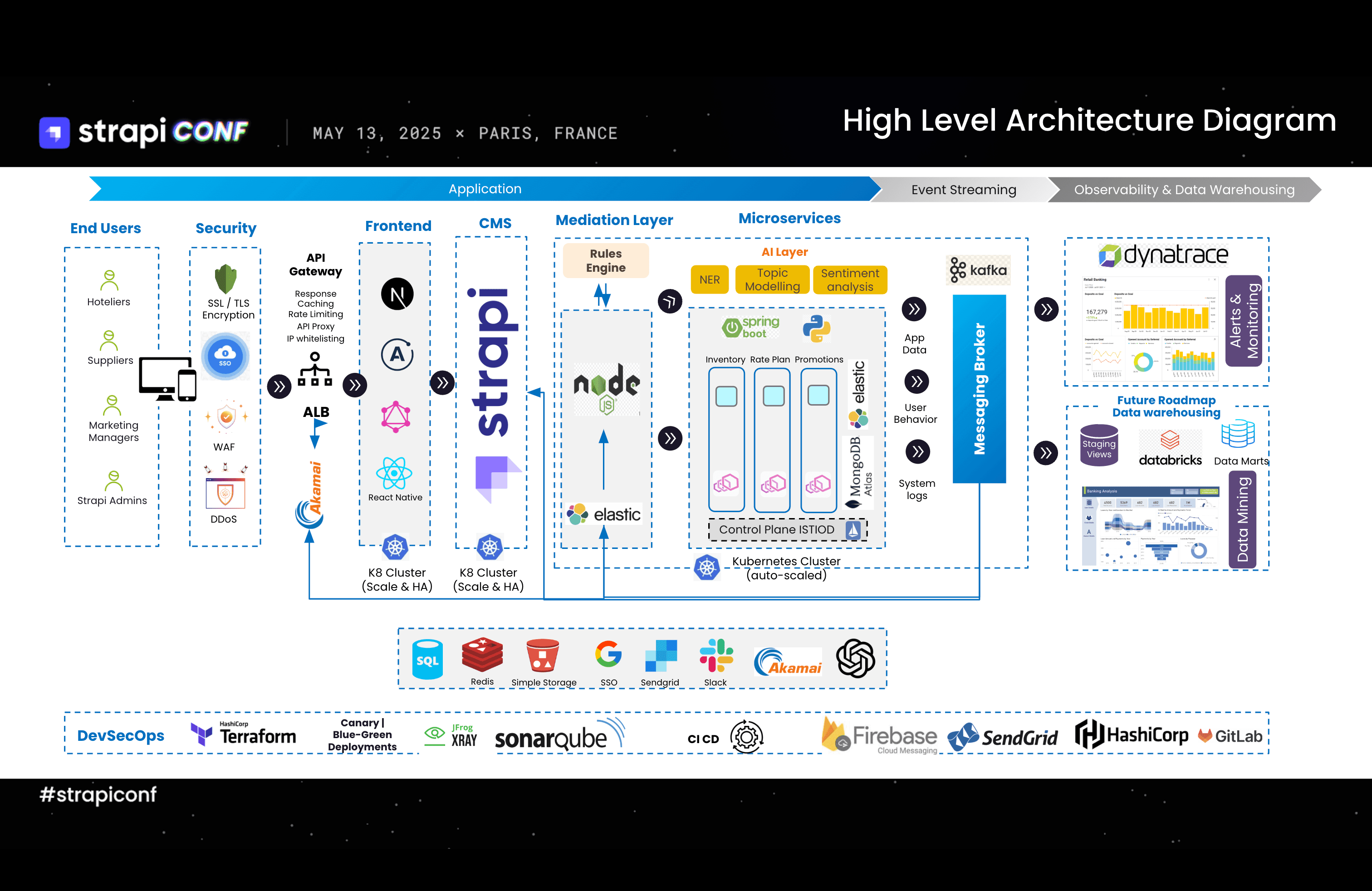
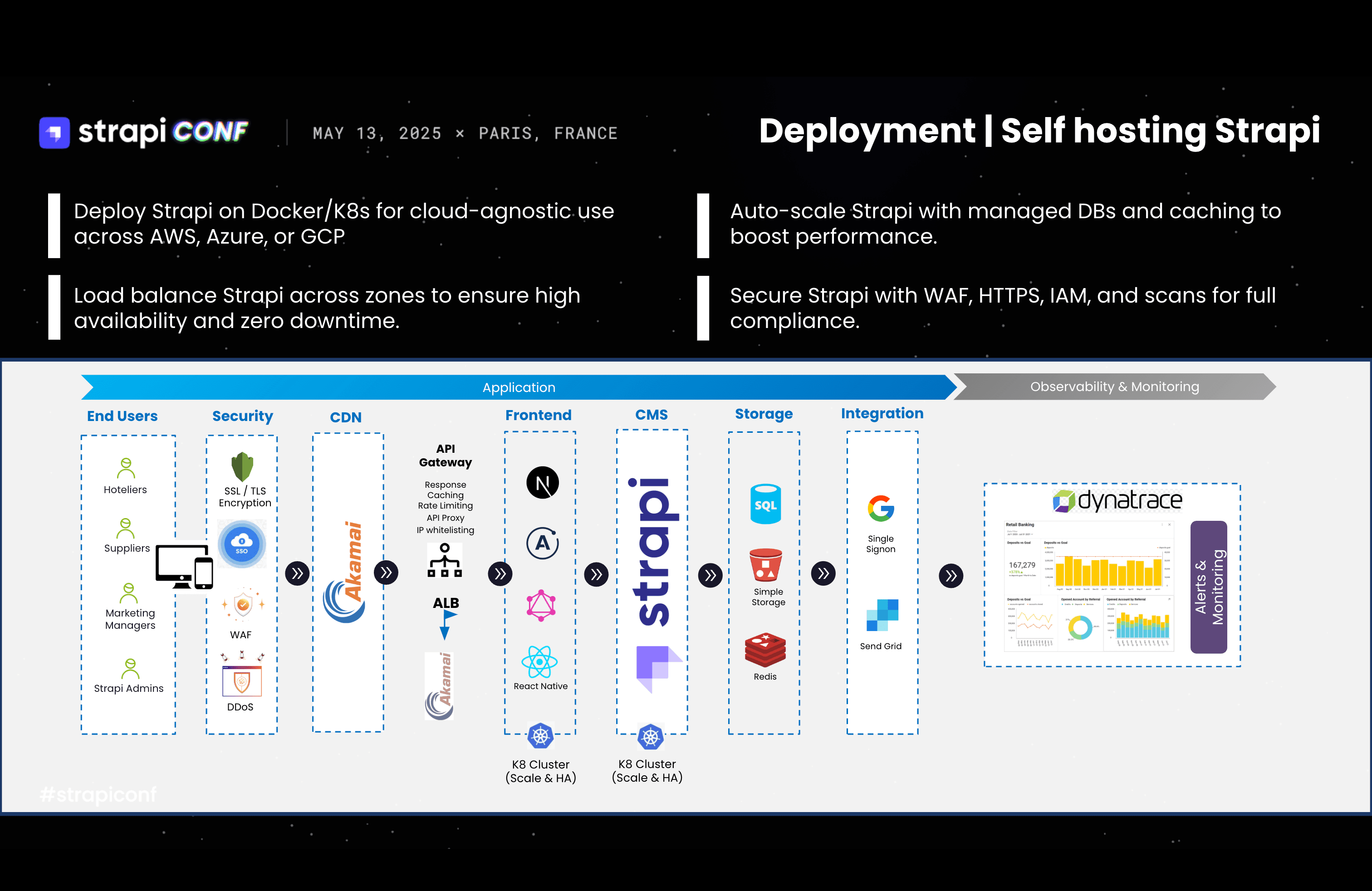
Strapi was selected after a data-driven evaluation process. Successive Digital deployed it in a self-hosted setup with Docker and Kubernetes, using PostgreSQL for content storage and Redis for caching. Content was distributed across Akamai CDN to improve asset delivery and reduce direct hits to the origin.
This infrastructure allowed Yatra to handle traffic at scale. Caching logic reduced GraphQL response times from around two seconds to double-digit milliseconds. The architecture was built with high availability, using load balancing across zones and zero downtime deployment strategies.
The team also introduced security best practices, including SSL encryption, API gateway rate limiting, IP whitelisting, and monitoring with Dynatrace.
Caching helped us reduce a 2-second GraphQL call to something in double-digit milliseconds.
Prabal Raghav, Sr. Manager Technology at Successive Digital
Editor-friendly and developer-ready
One of the first problems solved was the lack of developer efficiency. Before Strapi, pushing code meant triggering multiple Jenkins jobs for builds and deployments. Successive replaced this with a GitHub Actions-based pipeline, introducing a structured CI/CD process with automated linting, tests, tagging, and manual promotion to production.
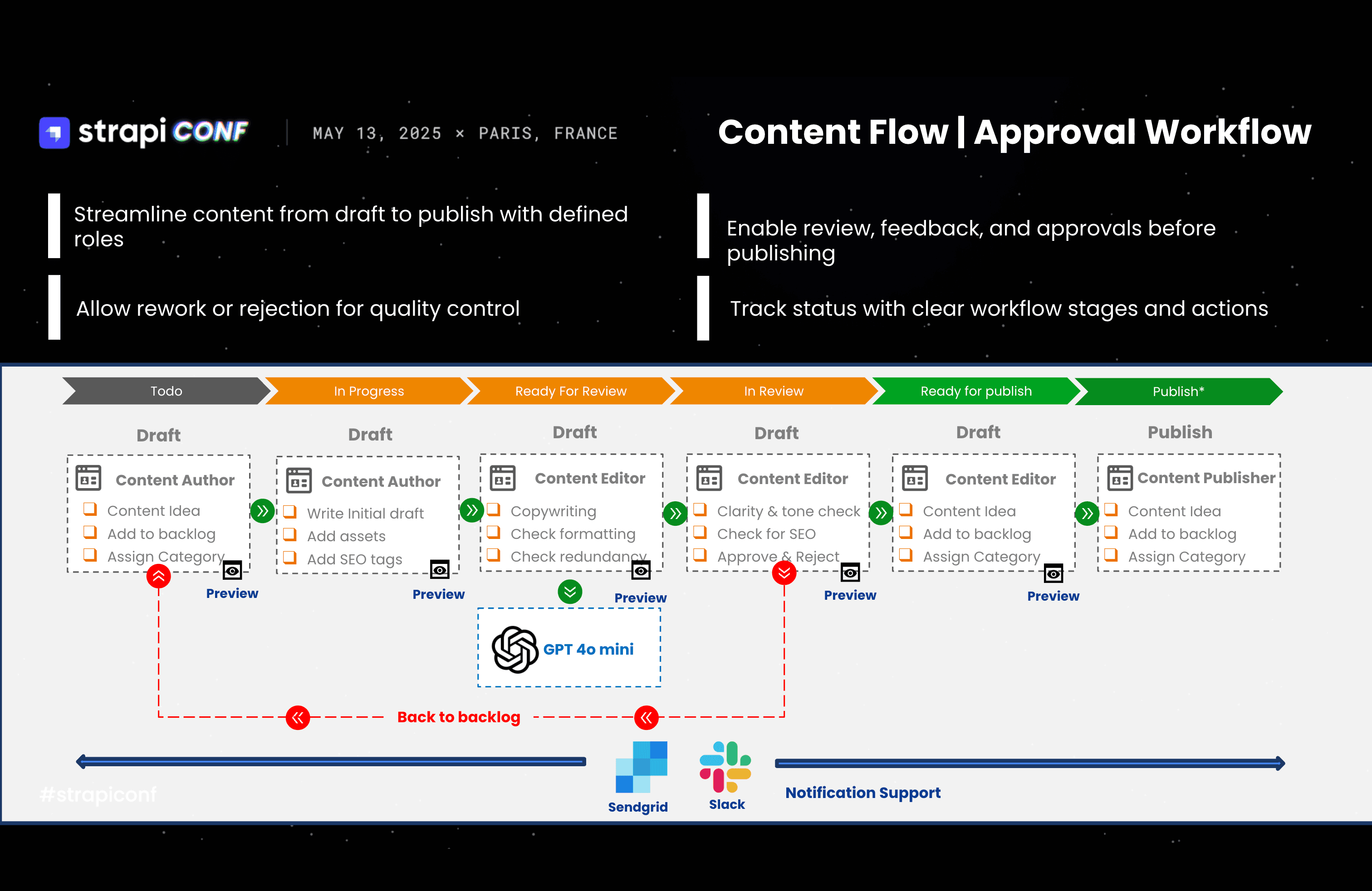
For editors, the transformation was just as meaningful. The team implemented a custom content workflow using Strapi 5’s Draft & Publish feature. Roles were clearly defined using RBAC: content authors created and tagged drafts, editors checked for SEO and formatting, and publishers handled final release. The team built a preview system to allow all content to be reviewed before publishing.
“We created three different roles in their content approval journeys: an author, an editor, and a publisher,” said Prabal.
All transitions triggered Slack and email notifications with deep links into Strapi. The notification system identified which user needed to take action and included call-to-action buttons to guide them directly into the content.
The team also introduced an AI content review agent. This assistant provided suggestions on clarity, tone, and SEO but did not block the workflow.
“It would facilitate your ready for review flow. This was just to facilitate, act as a co-pilot to the content admins, not block their process,” said Prabal.
Optimized for SEO and media
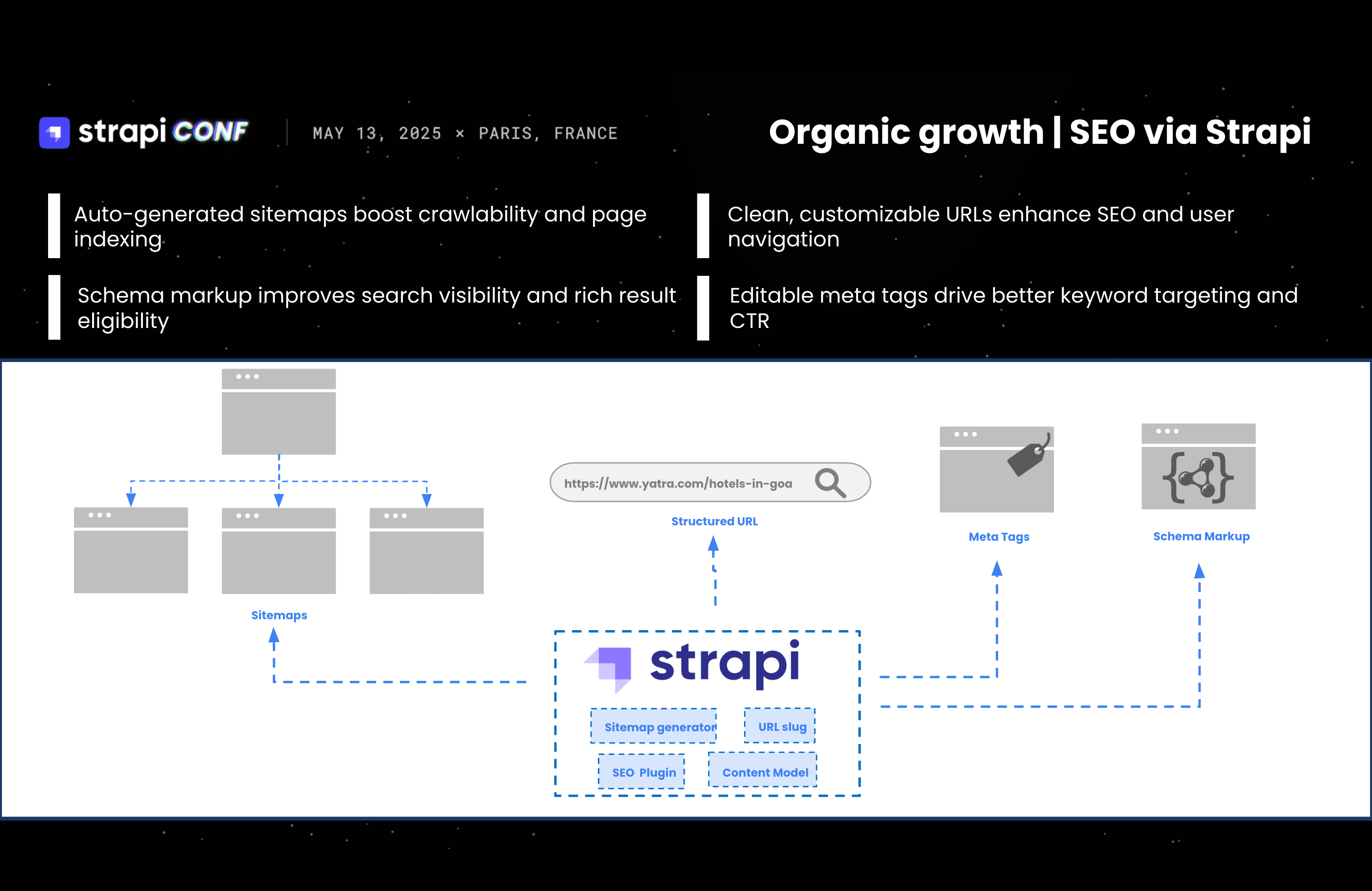
Yatra had hundreds of SEO pages, including flight and hotel destination permutations, many of which were not loading efficiently or ranking well. Strapi helped restructure these with clean URLs using slugs, editable meta tags, dynamic sitemap generation, and schema markup via structured JSON.
The team also integrated Akamai’s media services. Images were synced from Akamai into Strapi’s media library, eliminating the need for local uploads. Assets were already vetted, optimized for modern formats like WebP, and available via CDN URLs.
“There were hundreds of such SEO pages, hundreds of such sitemaps that we had to cater for,” Prabal explained.
Implementation overview
- CMS backend: Strapi 5 (self-hosted, Docker and Kubernetes)
- Frontend: Next.js for web, React Native for mobile
- Database and caching: PostgreSQL and Redis
- Media delivery: Akamai DAM and CDN integration
- CI/CD: GitHub Actions for build and deploy automation
- Monitoring: Dynatrace
Results at a glance
| Metric | Outcome |
|---|---|
| Content velocity | 4+ marketing campaigns launched every month |
| Platform migration | 100% of hotel booking traffic moved to the new Strapi platform |
| SEO performance | Improved rankings for hotel city landing pages |
| API response times | GraphQL calls reduced by at least 95% in latency |
| Developer efficiency | End-to-end CI/CD with rollback support and image tagging |
| Editor workflows | Draft, review, publish, and preview flows fully implemented |
A CMS that works for every team
The move to Strapi gave Yatra a platform where developers could scale with confidence, and marketers could move without relying on engineering for every content update. It also brought critical SEO capabilities and performance improvements that directly impacted search visibility and user experience.
Since the implementation, we have seen a significant improvement in content turnaround time and reduced back and forth with tech teams.
Bharatt Malik, Senior Vice President at Yatra

What’s next
With the hotel booking flow now fully migrated, Yatra is planning to expand Strapi into additional verticals. New campaigns, more personalized content, and broader CMS adoption are all on the roadmap.
The partnership with Successive Digital and the flexibility of Strapi laid the foundation for a modern content infrastructure that continues to scale with the business.